Flame Arresster

Flame Arresteris used for preventing flame transmission when an explosion is occurred inside of the piping which full of explosive mixed gas

FLAME ARRESTER OPERATION & SELECTION
Flame arresters are passive devices with no moving parts. Flame arresters prevent the propagation of flame from the exposed side of the unit to the protected side by the use of wound crimped metal ribbon type flame cell element(Figure 03). This construction produces a matrix of uniform openings that are carefully constructed to quench the flame by absorbing the heat of the flame. This provides an extinguishing barrier to the ignited vapour mixture. Under normal operating conditions the flame

arrester permits a relatively free flow of gas or vapour through the piping system. If the mixture is ignited and the flame begins to travel back through the piping, the arrester will prohibit the flame from moving back to the gas source.
Flame arrester operation
When the combusted gas pass through the heat exchange lattace net of the element bank of the flame arrester in inline Flame arrester type, the combusted gas ignified by the quenching is completely extinguished by lowering the temperature under below the natural ignition point. Thus, this item is designed to extinguish the fire automatically, and the heat is absorbed by the element bank of flame arrester and the fire cannot be spread.
MESG (Maximum Experimental Safe Gap)

Measurement of the maximum gap between two equatorial flanges on a metal sphere that will prevent a flame from being transmitted from the sphere to the surrounding flammable mixture. MESG is dependent on gas composition,
The stoichiometric mixture is used to determine the minimum MESG value for a given gas.
Flame arrester selection
Flame propagation poses significant dangers to systems and personnel in industries worldwide. Careful consideration must be taken to determine whether to use a Flame Arrester or a Detonation Flame Arrester. There are two basic determinations when evaluating the intended application:
Q. The location of the ignition source from the flame arrester, and;
Q. What needs to be protected.
First, determine the location of all potential ignition sources (i.e. flare, vacuum pump, blower, burner, lightning strike, static discharge, etc).
Second, evaluate the system to determine exactly what should be protected (i.e., the gas source, process component, personnel, upstream process facility, tank, etc.).
When you have determined the ignition source(s) and what is to be protected, the following parameters should be evaluated in order to determine the appropriate flame arrestment protective device:
1. Length and configuration of pipe and pipe between ignition source and arrester.
2. System gas grouping.
3. Initial operating pressure.
4. Flame stabilisation on element.
All of these variables affect the performance of the arrester and can also affect the dynamics of flame propagation
Deflagration Application (Inline / End of Line)
The inline flame arrester and the end of line (free vent) arrester are used to stop flame propagation of confined and unconfined low pressure deflagrations. They are typically used for limited piping applications when the system operating pressure is near atmospheric levels.
Detonation Application(Inline)
The detonation flame arrester is an advanced technology flame arrester. They are used to stop the high pressures and velocities associated with detonation. They stop confined and unconfined low and high pressure deflagrations, stable and overdriven detonations. Application parameters for the detonation flame arresters far exceed those of flame arresters for pipe lengths, configurations, system operating pressures, and flame stabilization. Our flame arresters are designed, manufactured and tested according to BS7244. BSEN12874 and ISO16852 test standards and codes.
System Gas Grouping
The type of gas in the system and it’s corresponding gas group determines the design of the arrester element. The SS316L element must be designed to accommodate the specific gas group that could possibly ignite and propagate in the system. The available designs consist of International Electric Code (IEC) group gases into IIB,IIA and IIC, the National Electric Code (NEC) groups gases into A, B, C and D categories depending on the MESG value of the gas.

DEFLAGRATION FLAME ARRESTERS
Deflagation flame arresters provide positive protection against flame propagatin to the protected side in case of deflagration of explosive vapor/air or gas/air mixtures.
They are designed to protect against continuous burning against the 316LSS flame cell elements for a specific period.
ATEX-KSFI-A_IIA ATEX-KSFI-A_IIB3
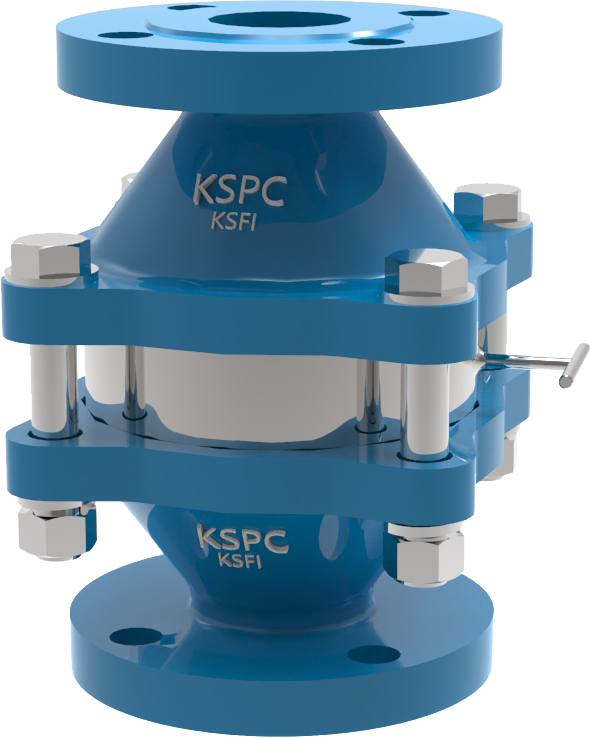
KSFI / KSFI-A TYPE
The model KSFI Inline Flame Arrester is designed, manufactured, tested according to API 2000, British Standard Specification Code BS7244, and EN 12874 / ISO 16852. The units are passive devices with no moving parts. They prevent the propagation of flame from the exposed side of the unit to the protected side by the use of a 316L stainless steel crimped metal ribbon type flame cell element. This construction produces a matrix of uniform opening that are carefully constructed to quench the flame by absorbing the heat.>>>>>Data sheet
KSFI-J TYPE
The model KSFI-J inline fl ame arrester is designed, manufactured, tested according to API 2000,British Standard Specification Code BS7244 and ISO 16852. The units are passive devices with no moving parts. They prevent the propagation of fl ame from the exposed side of the unit to the protected side by the use of a 316L stainless steel crimped metal ribbon type fl ame cell element. This construction produces a matrix of uniform opening that are carefully constructed to quench the fl ame by absorbing the heat.

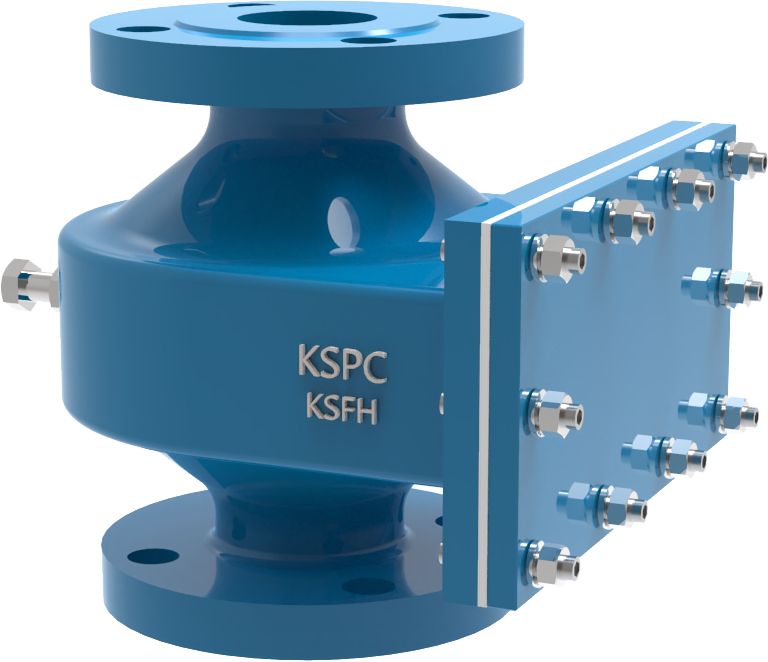
KSFH TYPE
The model KSFH Inline Flame Arrester is designed, manufactured, tested according to API 2000, British Standard Specification Code BS7244, and EN 12874 / ISO 16852. Additionally All most of size shall be approved FM (Factory Mutual). The units are passive devices with no moving parts. They prevent the propagation of flame from the exposed side of the unit to the protected side by the use of a 316L stainless steel crimped metal ribbon type flame cell element. This construction produces a matrix of uniform opening that are carefully constructed to quench the flame by absorbing the heat.>>>>>Data sheet
ATEX-KSFE-A_IIA
KSFE / KSFE-A TYPE
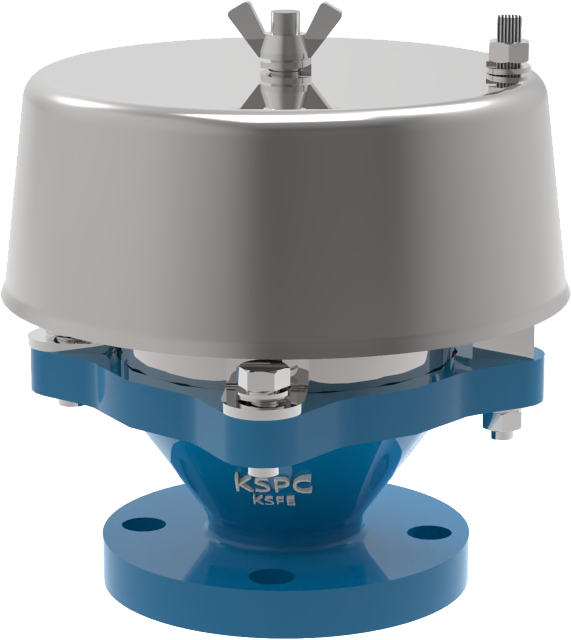
The KSFE flame arrester are designed, manufactured and tested according to API2000, BS7244 (British Standard Specification), and EN 12874 / ISO 16852. The units allow free venting in combination with flame protection for vertical vent applications. They prevent flame propagation by absorbing and dissipating heat using spiral wound crimped ribbon 316LSS flame cells.>>>>>Data sheet
ATEX-KSFE-S_IIA ATEX-KSFE-S_IIB3
KSFE-S TYPE
The model KSFE-S fl ame arrester are designed, manufactured and tested according to API2000, BS7244 (British Standard Specifi cation) and ISO 16852. The units allow free venting in combination with fl ame protection for vertical vent applications. They prevent fl ame propagation by absorbing and dissipating heat using spiral wound crimped ribbon SS316L fl ame cells. >>>> Data sheet
DETONATION FLAME ARRESTERS
✰ Detonation flame arresters provide positive protection against flame propagation in piping systems that are manifolded or have long runs.
The arresters are designed to stop and ignited flammable vapour mixture travelling at subsonic or supersonic velocities.
They are also designed to protect against continuous burning against the 316LSS flame cell elements for a specific period

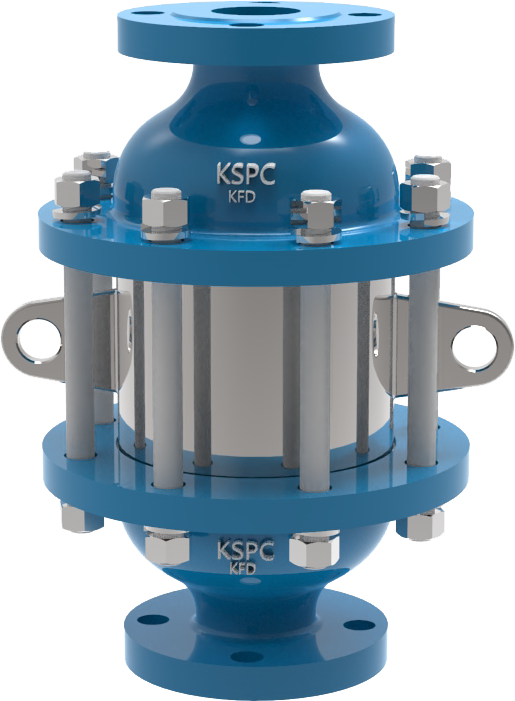
KFD TYPE
The model KFD inline detonation flame arrester is designed, manufactured and tested according to API 2000, British Standard Specification Code BS7244, EN 12874 / ISO 16852 & USCG, IMO MSC/Circ.677. The KFD detonation flame arresters provide protection against flame propagation in piping systems that are manifolded or have long runs. The arresters are designed to stop an ignited flammable vapor mixture traveling at subsonic or supersonic vapor velocities. They are also designed to protect against continuous burning against the 316LSS flame cell for a specific period.>>>>>Data sheet
ATEX-KSFD-A_IIA ATEX-KSFD-A_IIB3
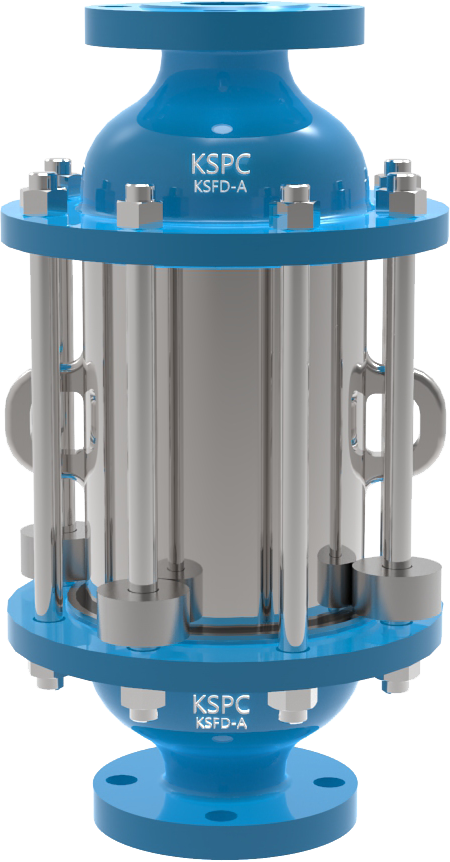
KSFD-A TYPE
The model KSFD-A inline detonation flame arrester is designed, manufactured and tested according to API 2000, British Standard Specification Code BS7244, and EN 12874 / ISO 16852. The KSFD-A detonation flame arresters provide protection against flame propagation in piping systems that are manifolded or have long runs. The arresters are designed to stop an ignited flammable vapor mixture traveling at subsonic or supersonic vapor velocities. They are also designed to protect against continuous burning against the 316LSS flame cell for a specific period.>>>>>Data sheet

KSFLD TYPE
The model KSFL inline detonation flame arrester is designed, manufactured and tested according to API 2000, British Standard Specification Code BS7244, and EN 12874 / ISO 16852. The units are passive devices with no moving parts. The KSFL detonation flame arresters provide protection against flame propagation in piping systems that are manifolded or have long runs. The arresters are designed to stop an ignited flammable vapor mixture traveling at subsonic or supersonic vapor velocities. They are also designed to protect against continuous burning against the 316LSS flame cell for a specific period.
>>>Data sheet